

You turn 40, your distance vision still seems clear, and you have no eye pain or noticeable problems.
So, do you really need to think differently about eye examinations?
For many adults, the answer is yes.
Your 40s are an important transition point for eye health. You may begin noticing normal changes in near vision, but this is also an age when it becomes increasingly useful to understand what is happening inside the eye, not simply whether you can read an eye chart.
A comprehensive eye examination can provide information about your vision and the health of structures including the cornea, lens, optic nerve, and retina.
For Dr Mandeep Lamba, whose clinical work includes the assessment and management of retinal and vitreous conditions, this distinction is particularly important:
Seeing clearly today does not give us the complete picture of eye health.
That is why your 40s can be a sensible time to establish a clearer understanding of your eyes and determine what follow-up may be appropriate for you.
Why Does Eye Health Become More Relevant in Your 40s?
Your eyes change throughout life, but some changes become much more noticeable during your 40s.
The most familiar example is presbyopia.
This is a normal age-related change in which the natural lens inside the eye gradually becomes less flexible. As a result, focusing on objects at close range becomes more difficult.
You may start noticing that you:
- hold your phone farther away
- need brighter light to read
- increase the font size on your screen
- struggle with fine print
- experience tired eyes after prolonged near work
- develop headaches after reading or computer work
These changes do not automatically indicate eye disease. Presbyopia is a normal part of ageing and commonly becomes noticeable during middle age.
However, needing reading glasses is not the only reason to think about an eye examination in your 40s.
This stage of life is also a useful opportunity to assess the health of the eye itself.
A Clear Eye Chart Does Not Tell the Whole Story
One common assumption is:
“My eyesight is good, so my eyes must be healthy.”
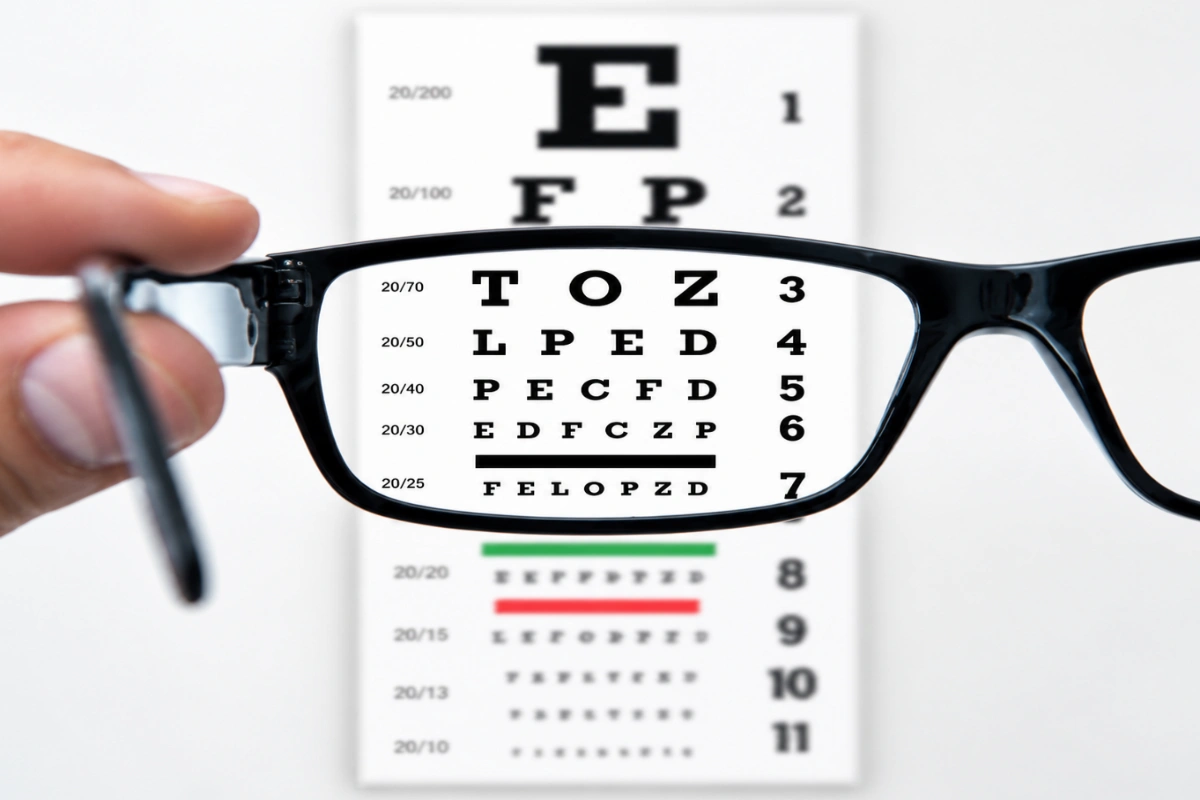
Visual clarity is important, but it is only one part of an eye assessment.
Someone may be able to read the smallest letters on an eye chart while still having an eye condition that has not yet noticeably affected central vision.
This matters because certain conditions can develop gradually and may produce few symptoms during their earlier stages.
Glaucoma, for example, may initially develop without obvious symptoms and can gradually affect peripheral vision.
For people with diabetes, retinal changes may also develop before noticeable vision changes occur.
This is why the question after 40 should not simply be:
“Do I need glasses?”
It should also be:
“What is the current health of my eyes?”
What Is a Baseline Eye Screening?
A baseline eye screening gives your ophthalmologist a reference point for your current eye health.
Think of it as documenting where your eyes stand today.
Your examination may provide information about:
- your visual acuity
- your glasses prescription
- pressure inside the eye
- the condition of the cornea
- the natural lens
- the optic nerve
- the retina
- peripheral vision, when clinically indicated
Depending on your history and examination findings, pupil dilation or additional investigations may also be advised.
The purpose is not to assume that something is wrong.
Instead, the examination helps answer three practical questions:
What do my eyes look like now?
Do I have any factors that need monitoring?
When should my next examination be?
Having this information can make future assessments more meaningful because your ophthalmologist has a clinical reference for comparison.
Why the Retina Deserves Attention Even When Vision Feels Normal
The retina is the light-sensitive tissue lining the back of the eye. It converts incoming light into signals that are ultimately interpreted by the brain as vision.
Because of its location inside the eye, retinal health cannot be judged simply by looking in a mirror or checking how clearly you read.
A detailed retinal assessment may be particularly relevant if you have factors such as:
- diabetes
- significant short-sightedness
- a history of eye injury
- previous eye surgery
- a personal history of retinal disease
- certain family histories of eye disease
- new visual symptoms
This is an area Dr Mandeep Lamba places particular emphasis on in his clinical work involving retinal and vitreous conditions.
A retinal assessment is not about looking for a problem in every patient. It is about examining the relevant structures when clinically appropriate and understanding whether anything requires observation, further investigation or management.
What Can a Comprehensive Eye Exam Assess?
A comprehensive eye exam in Dubai should be thought of as more than a glasses-prescription check.
The exact examination varies according to the individual, but it may include several components.
1. Visual Acuity
This measures how clearly you can see at different distances.
It helps identify whether there has been a change in vision and whether refractive correction may be required.
2. Refraction
If appropriate, refraction determines whether you are short-sighted, long-sighted, have astigmatism or require help with near vision.
3. Eye Pressure
Intraocular pressure may be measured as part of the assessment.
Eye pressure is one piece of information used when evaluating glaucoma risk, but it is not interpreted in isolation.
4. Slit-Lamp Examination
A slit lamp allows the ophthalmologist to examine structures at the front of the eye in detail, including the cornea, iris and lens.
5. Optic Nerve Assessment
The optic nerve carries visual information from your eye to your brain.
Its appearance may be assessed as part of a comprehensive eye examination, particularly when evaluating glaucoma or other optic nerve concerns.
6. Retinal Examination
The retina and other structures at the back of the eye can be examined, particularly when dilation is clinically appropriate.
Dilating the pupil allows a broader view inside the eye and can help the ophthalmologist assess the retina, optic nerve and other internal eye structures.
7. Additional Investigations When Needed
Not every person requires every test.
Depending on the examination findings, an ophthalmologist may recommend investigations such as:
- OCT imaging
- retinal photography
- visual-field testing
- corneal measurements
- other condition-specific investigations
These tests should be guided by the patient’s symptoms, history and clinical findings.
Eye Conditions That Become Increasingly Relevant With Age
Turning 40 does not mean that an eye condition is expected.
It does mean that age, together with other personal risk factors, becomes more relevant when deciding how frequently your eyes should be assessed.
Presbyopia
Presbyopia is a normal age-related change rather than an eye disease.
As the natural lens becomes less flexible, close-up focusing becomes more difficult. For many people, this becomes noticeable during their 40s.
Glaucoma
Glaucoma refers to a group of conditions that can damage the optic nerve.
Early glaucoma may not cause noticeable symptoms, which is why assessment of the optic nerve and individual risk factors can be important.
Your ophthalmologist may consider factors including age, family history, eye pressure and examination findings when deciding whether additional glaucoma testing or monitoring is appropriate.
Cataract
The natural lens of the eye gradually changes with age.
A cataract develops when the lens becomes cloudy enough to affect vision.
Not every early lens change requires treatment. In many cases, the appropriate approach is observation until the change becomes clinically significant or begins interfering with daily activities.
Diabetic Retinal Changes
People living with diabetes require a different approach to eye screening.
Diabetes can affect blood vessels within the retina, and changes may occur before a person notices significant visual symptoms.
Anyone with diabetes should follow the retinal screening or examination schedule recommended for their individual condition rather than waiting until their 40s to begin eye checks.
Who May Need Eye Examinations Earlier or More Frequently?
The age of 40 should not be treated as a universal starting line.
Some people should have their eyes assessed earlier, while others may need more frequent follow-up.
This may include people with:
- diabetes
- high blood pressure
- a family history of glaucoma or certain eye diseases
- significant myopia
- previous retinal problems
- previous eye surgery
- previous eye trauma
- long-term use of medications that may affect the eyes
- an existing eye condition
- unexplained visual symptoms
Your examination frequency should therefore be based on your individual risk profile rather than age alone.
When Should You Start Regular Eye Checkups?
If you have been searching “when to start regular eye checkups,” there is no single schedule that applies to every adult.
People should not necessarily wait until their 40th birthday for their first detailed eye examination.
Adults without known eye disease should still have periodic eye assessments before 40, while the 40s become an increasingly important period for establishing eye-health findings and determining an appropriate follow-up schedule.
After your examination, your ophthalmologist may recommend the timing of your next visit based on factors such as:
- your current eye health
- age
- prescription
- family history
- general health
- retinal findings
- optic nerve findings
- existing medical conditions
For some people, routine monitoring may be sufficient.
For others, closer follow-up may be appropriate.
The schedule should be individualised rather than based solely on a generic age interval.
Is a Routine Vision Test Enough After 40?
Not always.
A routine vision check primarily answers:
“How clearly can you see?”
A comprehensive ophthalmic examination asks a broader question:
“How healthy are the structures responsible for that vision?”
This difference becomes increasingly relevant in your 40s.
A person may need very little change in their glasses prescription but may still benefit from evaluation of the lens, eye pressure, optic nerve or retina based on their clinical history.
So, if your last eye check was limited to updating spectacles, it may be worth discussing whether a more comprehensive examination is appropriate for you.
Do Screens Make Eye Exams More Important in Your 40s?
Many people in their 40s spend a large part of the day moving between laptops, phones and other digital devices.
Prolonged screen use can contribute to symptoms such as:
- eye strain
- dryness
- tired eyes
- temporary blur
- headaches
- difficulty shifting focus
However, screen-related discomfort and age-related eye disease are not the same thing.
An examination can help distinguish whether symptoms are related to dry eye, refractive error, presbyopia, prolonged near work or another eye condition.
Instead of assuming that every symptom is simply caused by “too much screen time,” persistent or changing symptoms should be assessed appropriately.
What Should You Tell Your Ophthalmologist During the Examination?
The conversation before the eye examination is just as useful as the tests themselves.
Tell your ophthalmologist if you have:
- noticed a recent change in vision
- started struggling with near work
- experienced new flashes or floaters
- previously had an eye injury
- undergone eye surgery
- diabetes or high blood pressure
- a family history of glaucoma or retinal disease
- started new medications
- significant short-sightedness
- noticed distortion or missing areas of vision
These details help determine which parts of the examination deserve particular attention.
New Floaters or Flashes Should Not Simply Be Added to Your Routine Checkup List

A routine examination in your 40s is different from an assessment for a new visual symptom.
Dr Mandeep Lamba particularly emphasises this distinction because his clinical work includes retinal and vitreous conditions.
Occasional longstanding floaters can be common, but a sudden onset or noticeable increase in floaters, particularly when accompanied by flashes of light or a curtain or shadow in the vision, warrants prompt ophthalmic assessment.
These symptoms can occur with changes in the vitreous and, in some cases, may be associated with a retinal tear or retinal detachment.
The purpose of mentioning this is not to create unnecessary concern. It is simply important not to postpone a new retinal symptom until the date of your next routine examination.
What Does Dr Mandeep Lamba Look for Beyond Your Glasses Number?
For Dr Mandeep Lamba, an eye assessment is not limited to whether a patient needs a different prescription.
His clinical work involving the retina and vitreous places particular attention on understanding the structures inside the eye and interpreting symptoms in the context of the patient’s overall eye health.
Depending on the reason for your visit, an assessment may consider:
- whether your vision change is refractive or related to another cause
- the appearance of the retina
- the condition of the vitreous
- the optic nerve
- the natural lens
- your eye pressure
- your personal and medical risk factors
The findings then guide whether reassurance, routine monitoring, further investigation or a treatment discussion is appropriate.
This keeps the focus where it should be: on the individual patient’s clinical findings rather than a one-size-fits-all recommendation.
Conclusion: Your 40s Are an Eye-Health Checkpoint, Not a Deadline
Your 40s are not the age at which eye care suddenly begins.
They are, however, an important stage when eye care often becomes more proactive.
You may start noticing changes in near vision. Your medical history may have changed. And age begins to carry more relevance when your ophthalmologist considers the health of your retina, optic nerve, lens and other structures within the eye.
A baseline eye screening or comprehensive examination can help establish where your eye health stands today and whether anything needs to be monitored over time.
For Dr Mandeep Lamba, whose clinical work includes retinal and vitreous conditions, an important message for patients is:
Do not assess the health of your eyes only by how clearly you can see today.
A comprehensive eye examination looks beyond your glasses number. It considers the structures responsible for vision, your individual risk factors and any changes that may require observation or further assessment.
If you are in your 40s and wondering when to start regular eye checkups, this can be an appropriate time to discuss your eye health, medical history and previous examinations with an ophthalmologist.
The right examination and follow-up schedule should always be based on your individual clinical needs.
Frequently Asked Questions
1. Should everyone have a comprehensive eye exam at 40?
Your 40s are an important eye-health milestone, but recommendations should be individualised.
You should not necessarily wait until 40 for your first eye examination, particularly if you have symptoms, an existing medical condition or recognised risk factors for eye disease.
2. What is a baseline eye screening?
A baseline eye screening documents your current vision and eye-health findings.
It provides a reference point that may be useful during future examinations, particularly when your ophthalmologist is monitoring changes in areas such as the retina, optic nerve, eye pressure or lens.
3. Do I need an eye examination if I can see clearly?
You may.
Clear vision does not provide complete information about the health of the retina, optic nerve, lens and other structures within the eye.
An ophthalmologist can advise whether a comprehensive examination is appropriate based on your age, medical history, symptoms and individual risk factors.
4. How often should my eyes be checked after 40?
There is no single interval that applies to everyone.
The appropriate frequency depends on your:
- age
- examination findings
- family history
- prescription
- medical conditions
- existing eye conditions
- individual risk factors
Your ophthalmologist can recommend an appropriate follow-up schedule after assessing your eyes.
5. Is a comprehensive eye exam the same as getting my glasses checked?
No.
A glasses or prescription test mainly assesses refractive error and visual clarity.
A comprehensive eye examination can also include evaluation of the cornea, natural lens, eye pressure, optic nerve and retina when clinically appropriate.
6. What are the common vision changes after 40?
One of the most common changes is presbyopia, which makes focusing on close objects more difficult.
You may start holding reading material farther away, needing more light, increasing your phone font size or noticing eye strain during near work.
7. Should I wait for my routine eye check if I suddenly develop floaters?
A sudden onset or significant increase in floaters, especially when accompanied by flashes of light or a curtain or shadow in the vision, should be assessed promptly rather than waiting for a routine examination.
These symptoms may need a detailed retinal assessment.
8. Where can I get a comprehensive eye exam in Dubai?
If you are considering a comprehensive eye exam in Dubai, an ophthalmic consultation can help determine which assessments are appropriate based on your age, symptoms, health history and individual eye findings.
Dr Mandeep Lamba’s clinical work includes the assessment and management of retinal and vitreous conditions, alongside the evaluation of patients presenting with changes in vision and retinal symptoms.


