
You are comfortable driving without glasses.
Then you need another pair for your computer.
And when you pick up your phone, read a menu, or check a medicine label, you reach for your reading glasses again.
For many people with presbyopia, the frustration is not simply wearing glasses. It is constantly switching between different pairs for different distances.
This is one reason patients exploring refractive lens exchange in Dubai often come across terms such as:
Toric. Multifocal. EDOF.
At first, they can sound like three competing versions of the same thing.
They are not.
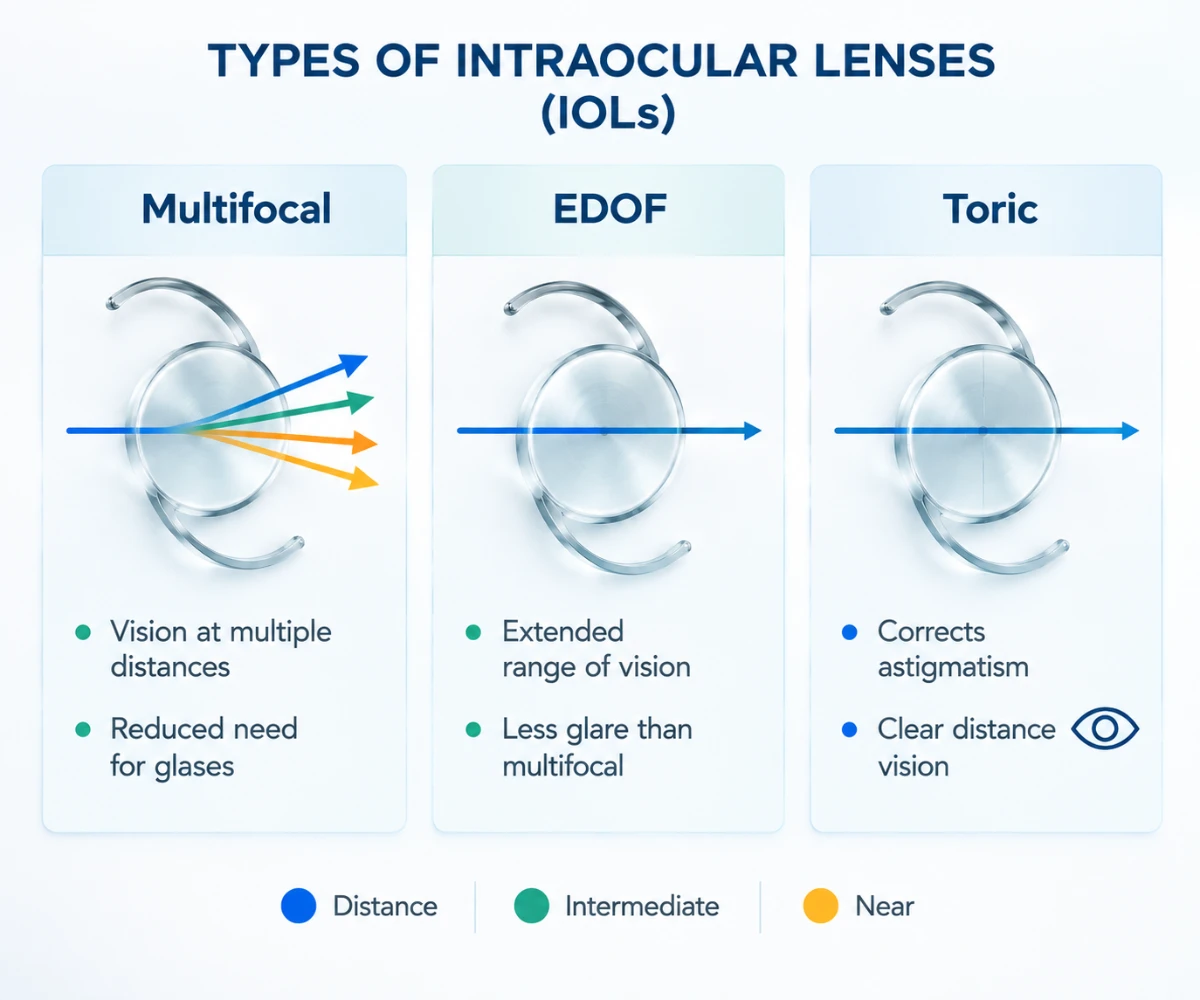
A toric lens primarily addresses astigmatism.
A multifocal lens is designed to provide vision at more than one focal distance, including near vision.
An extended depth of focus, or EDOF, lens aims to create a broader continuous range of vision, particularly from distance through intermediate distances, although reading glasses may still be required for smaller print or close work. Current European Society of Cataract and Refractive Surgeons guidance reflects these differences.
So if you are searching for the best IOL for presbyopia, the more useful question is not:
“Which lens is best?”
It is:
“Which lens design fits my eyes, prescription and everyday visual needs?”
That distinction is central when discussing lens options with Dr Mandeep Lamba.
First, What Is an Intraocular Lens?
An intraocular lens, commonly called an IOL, is a small artificial lens placed inside the eye after the natural lens is removed.
IOLs are routinely used during cataract surgery.
They can also be used during refractive lens exchange, or RLE.
The artificial lens has a calculated focusing power based on detailed measurements taken before surgery.
Different IOL designs can then be selected depending on factors such as refractive error, astigmatism, eye health and the distances at which a patient would like to reduce their dependence on spectacles.
The important word here is reduce.
No IOL should be presented as a guarantee that a person will never need glasses again.
What Is Refractive Lens Exchange?
Refractive lens exchange involves removing the natural lens of the eye and replacing it with an intraocular lens primarily to reduce dependence on glasses or contact lenses rather than because a visually significant cataract has developed.
In surgical terms, RLE uses essentially the same lens-replacement process as modern cataract surgery. The main difference is why the procedure is being performed.
RLE is sometimes considered in people with presbyopia, particularly when their age, prescription or visual needs make other forms of refractive correction less suitable.
However, it is intraocular surgery, not simply a more permanent version of buying new spectacles.
Before considering refractive lens exchange in Dubai, the eye needs to be assessed carefully to determine whether lens surgery is appropriate and which IOL design may suit the individual.
Toric vs Multifocal vs EDOF: What Is the Real Difference?
A useful way to understand these lenses is to separate two different questions:
Does the eye have astigmatism that needs correcting?
and
At which distances does the patient hope to reduce spectacle dependence?
That is why “toric versus multifocal versus EDOF” is not technically a perfect either-or comparison.
| Lens feature | Main purpose | Distance vision | Intermediate vision | Near/reading vision | Important consideration |
| Toric | Corrects corneal astigmatism | Depends on the underlying lens design | Depends on lens design | Depends on lens design | Toric technology can be combined with monofocal, multifocal or EDOF optics |
| Multifocal / Trifocal | Provides more than one focal range | Designed to provide useful distance vision | Usually included, particularly with trifocal designs | Designed to provide greater near vision | Halos, glare and other optical phenomena can be more noticeable |
| EDOF | Extends the usable range of focus | Usually strong | Usually a key strength | Near vision may be more limited than multifocal designs | Reading glasses may still be needed for close or fine print |
This distinction matters when discussing lens selection.
A patient with significant astigmatism who also wants an extended visual range, for example, may be considered for a toric version of an EDOF or multifocal lens if such a design is appropriate for their eye.
What Is a Toric IOL?
Astigmatism occurs when the eye’s focusing surfaces do not have the same curvature in every direction.
Instead of light coming to one precise focus, vision can appear blurred or distorted.
A toric IOL contains additional optical power designed to correct corneal astigmatism.
But this is where patients are often confused:
Toric Does Not Automatically Mean a Reading-Vision Lens
A standard monofocal toric IOL may correct astigmatism and provide clear vision at the chosen focal distance, often distance vision.
However, if the lens is focused for distance, the patient may still require reading glasses.
Toric lenses can also be manufactured with multifocal or EDOF optical designs. Mayo Clinic and ESCRS patient guidance both describe toric IOLs primarily as an option for correcting astigmatism rather than as a separate category of near-vision correction.
So, if you have astigmatism and presbyopia, the discussion is not necessarily:
“Toric or multifocal?”
It may instead be:
“Do I need toric astigmatism correction, and which range-of-focus design is suitable for me?”
What Is a Multifocal Lens?
A multifocal IOL uses optical zones or technology designed to provide more than one focal point.
Modern trifocal designs may aim to provide useful vision across:
distance, such as driving or watching television;
intermediate, such as computer work;
and near, such as reading or using a phone.
For patients specifically searching for a multifocal lens for reading glasses, this ability to provide near vision is one of the reasons multifocal or trifocal IOLs are considered.
Current ESCRS recommendations state that multifocal IOLs can provide better unaided near and intermediate vision than standard monofocal lenses and may be considered for patients seeking a higher chance of spectacle independence across far, intermediate and near distances.
However, this wider range of focus comes with trade-offs.
What Are the Trade-Offs With Multifocal IOLs?
Multifocal lenses divide or distribute incoming light in a way that allows different focal distances to be available.
As a result, some patients notice optical effects such as:
halos around lights, glare, starbursts or changes in contrast, particularly in lower-light situations.
These visual phenomena are reported more often with multifocal lenses than with monofocal lenses.
For many patients, these symptoms may become less noticeable as they adapt, but they should still be discussed before surgery rather than presented as an insignificant detail.
This becomes particularly relevant for people who:
drive frequently at night,
work in visually demanding low-light environments,
or are especially sensitive to visual quality and contrast.
The decision is therefore a balance between range of unaided vision and potential optical side effects.
What Is an EDOF Lens?
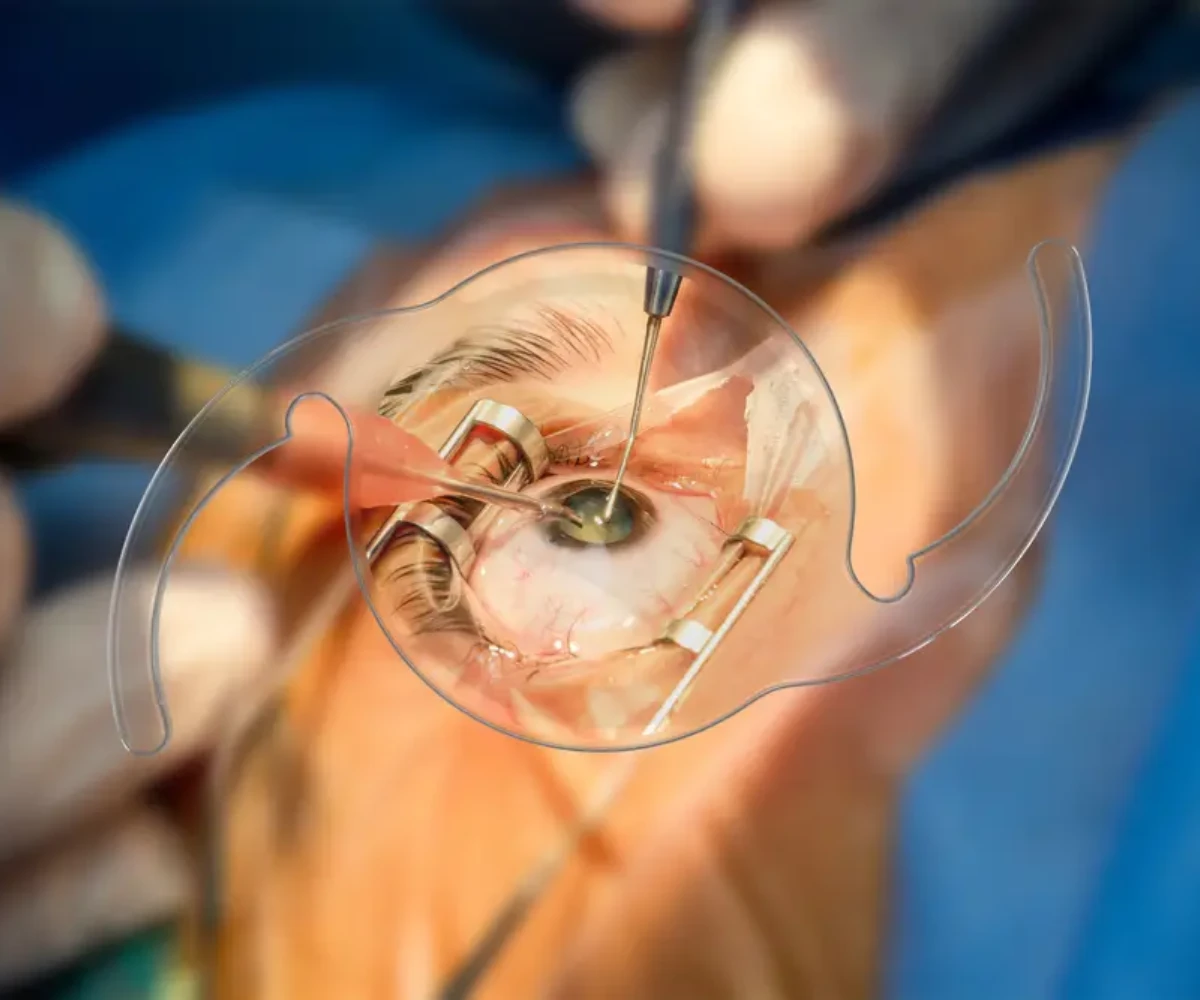
EDOF stands for Extended Depth of Focus.
Instead of providing several distinct focal points in the same way as a traditional multifocal design, an EDOF lens aims to extend the range over which vision remains usefully focused.
In practical terms, EDOF lenses are particularly designed to support:
distance vision and intermediate vision.
Intermediate vision matters more than many people initially realise.
Think about your normal day:
your car dashboard,
your laptop,
your desktop monitor,
the food on your plate,
or seeing someone’s face across a table.
These tasks sit between traditional distance vision and close reading.
ESCRS recommendations indicate that EDOF lenses can provide good distance and intermediate visual acuity and generally produce fewer dysphotopsias such as halos and glare than multifocal lenses. However, near vision tends to be more limited, and reading glasses may still be required.
EDOF vs Multifocal: Which Is Better for Reading?
If your priority is the strongest possible range into near reading vision, a multifocal or trifocal lens may offer more near-focus potential than a conventional EDOF lens.
If your priority is strong distance and intermediate vision with potentially fewer optical side effects, an EDOF design may deserve discussion.
Neither statement tells us which one you personally should choose.
For example, consider two patients.
One reads extensively, uses their phone frequently and strongly values reducing dependence on reading glasses.
Another drives frequently at night, works mainly on a desktop computer and is comfortable using glasses occasionally for very small print.
Their visual priorities are different.
So their IOL discussions may also be different.
Is There a “Best IOL for Presbyopia”?
This is one of the most common search queries patients use before a lens consultation:
“What is the best IOL for presbyopia?”
There is no single IOL that can accurately be described as the best option for every patient.
Lens selection depends on much more than age or reading-glasses strength.
Your ophthalmologist may need to consider your cornea, astigmatism, retina, optic nerve, macula, pupil characteristics, previous surgery, prescription and visual expectations.
The ESCRS specifically recommends detailed patient counselling when selecting a presbyopia-correcting IOL because lens designs involve different visual benefits and trade-offs.
A lens that works very well for one patient’s lifestyle may not be the right optical compromise for another.
Why Your Lifestyle Matters Before Choosing an IOL
Before talking about lens brands or technology, a useful consultation should understand how you actually use your eyes.
The relevant questions may include whether most of your day is spent driving, working at a computer, examining fine detail, reading printed documents or moving constantly between several distances.
Someone who rarely drives at night may view halos very differently from someone who regularly drives long distances after dark.
Someone who spends eight hours at a computer may place greater value on intermediate vision than someone whose work involves extensive close reading.
Someone willing to use occasional reading glasses may make a different decision from someone whose main goal is reducing spectacle dependence across several distances.
This is why Dr Mandeep’s approach to lens discussions should begin with the patient’s visual priorities, not simply with the name of an IOL.
Why the Retina Matters Before Refractive Lens Exchange
This is an especially important part of Dr Mandeep Lamba’s positioning.
The quality of vision after lens surgery does not depend only on the artificial lens.
It also depends on the health of the retina and macula receiving the image.
Before considering a presbyopia-correcting IOL, conditions affecting the retina, macula, optic nerve, cornea or ocular surface may influence whether a particular lens design is appropriate.
This becomes particularly relevant with multifocal IOLs because patients need adequate underlying ocular health to obtain the intended visual benefit. ESCRS patient guidance specifically notes that people with pre-existing eye-health problems may not be suitable for multifocal implantation.
For Dr Mandeep Lamba, whose clinical work includes retinal and vitreous conditions, this makes examination of the posterior segment particularly relevant when a patient is considering lens-based vision correction.
The question is not simply:
“Which premium lens do you want?”
It is:
“Is the eye healthy enough for this optical strategy, and which trade-offs make sense for this patient?”
Why High Myopia Needs Additional Consideration
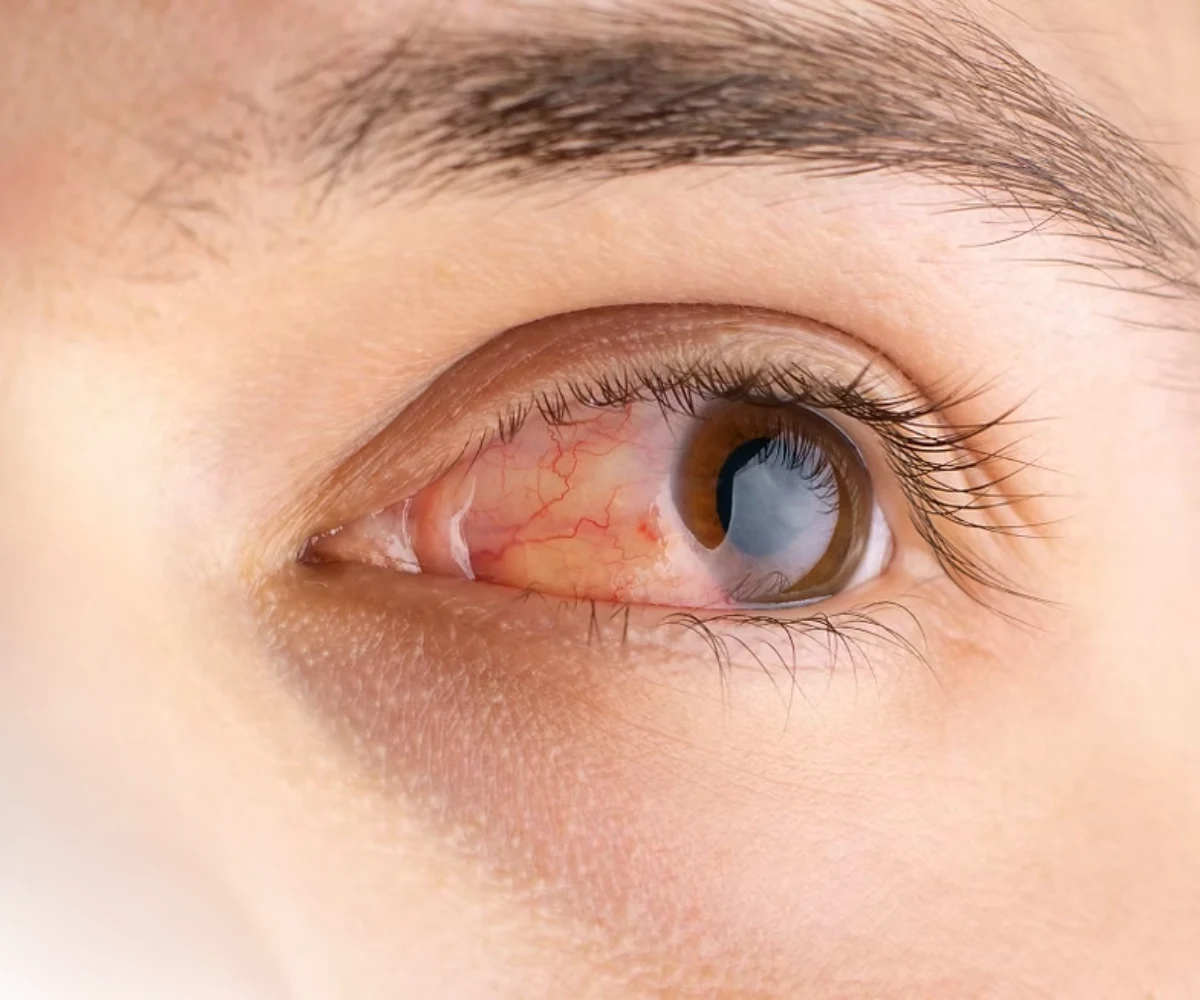
Patients with significant short-sightedness may be interested in refractive lens exchange because their spectacle prescription is high.
However, highly myopic eyes also require particular attention to retinal risk.
The ESCRS notes that retinal detachment is more common in highly myopic patients and that the risk is increased during the early years following cataract surgery or refractive lens exchange. Current ESCRS refractive-surgery recommendations also advise particular caution in younger highly myopic patients undergoing RLE.
This does not automatically mean that every highly myopic patient cannot undergo lens surgery.
It means the decision requires a careful evaluation of the individual eye and an appropriate discussion of the potential risks and alternatives.
From Dr Mandeep’s retinal perspective, this is particularly important.
What Tests May Be Needed Before Choosing an IOL?
Lens selection should follow a detailed eye assessment rather than beginning with a lens advertisement or online comparison.
Measurements and examinations may assess the refractive prescription, corneal shape and astigmatism, dimensions of the eye, ocular surface, natural lens and structures at the back of the eye.
Depending on the patient, additional imaging or retinal evaluation may be appropriate.
These findings are used not only to calculate IOL power but also to determine whether certain lens technologies are appropriate for that eye.
What Are the Risks of Refractive Lens Exchange?
RLE should be discussed as intraocular surgery, with potential benefits as well as limitations and risks.
Possible complications of lens surgery can include infection, inflammation, changes in eye pressure, posterior capsule opacification, retinal problems, macular oedema, unexpected residual refractive error, lens-position issues and other surgical complications.
The risk profile is not identical for every patient.
For example, retinal detachment deserves particular consideration in highly myopic individuals.
Presbyopia-correcting lenses may also produce optical phenomena including glare, halos or starbursts.
An informed discussion should therefore include what the lens may help with and what compromises may remain.
Does Refractive Lens Exchange Guarantee Freedom From Glasses?
No.
This is an important expectation to establish before surgery.
The goal of RLE with a presbyopia-correcting IOL may be to reduce dependence on spectacles across selected distances.
Some people may use glasses very little afterwards.
Others may still prefer or require glasses for particular tasks such as:
very small print,
prolonged detailed reading,
certain intermediate tasks,
or specific distance situations.
Residual prescription may also remain after surgery.
The appropriate way to discuss the procedure is therefore spectacle reduction, not a guarantee of complete spectacle independence.
Conclusion: The Right IOL Starts With the Right Questions
When patients compare toric, multifocal and EDOF lenses, it is tempting to look for one technology that does everything.
But lens selection is more nuanced than that.
A toric lens addresses astigmatism.
A multifocal or trifocal lens may provide a wider range extending into near vision but can involve optical trade-offs such as halos or glare.
An EDOF lens may provide strong distance and intermediate vision with a different balance between range of focus and optical phenomena, while reading glasses may still be needed for close tasks.
So when searching for the best IOL for presbyopia, the answer should not begin with a lens brand.
It should begin with your eyes.
For Dr Mandeep Lamba, whose clinical work includes retinal and vitreous conditions, evaluating the health of the retina and other structures inside the eye is an important part of understanding whether lens-based vision correction is appropriate.
Only after considering the health of the eye should the discussion move to your prescription, astigmatism, daily activities and expectations regarding glasses.
The goal is not to promise that you will never wear reading glasses again.
It is to determine whether an IOL strategy can appropriately reduce your dependence on glasses while balancing the visual benefits, limitations and risks relevant to you.
Considering Refractive Lens Exchange in Dubai?
If reading glasses have become increasingly inconvenient and you are exploring refractive lens exchange in Dubai, a detailed ophthalmic assessment can help determine whether lens-based correction is appropriate and which IOL options may be relevant to your eyes.
Frequently Asked Questions
1. What is the difference between toric, multifocal and EDOF lenses?
A toric IOL primarily corrects astigmatism. A multifocal or trifocal IOL is designed to provide vision at multiple focal distances, including near vision. An EDOF lens extends the range of clear vision, particularly through distance and intermediate ranges.
A toric design can also be combined with multifocal or EDOF optics.
2. Which lens is better for reading without glasses?
Multifocal or trifocal lenses generally provide a greater range of unaided near vision than conventional EDOF lenses.
However, multifocal lenses may also be associated with more halos, glare and other visual phenomena.
The appropriate choice depends on the patient’s eye health and visual priorities.
3. Will an EDOF lens let me read without glasses?
Possibly for some tasks, but it should not be assumed.
EDOF lenses are primarily designed to extend useful vision from distance through intermediate ranges. Reading glasses may still be required for close work or small print.
4. Does a toric lens correct presbyopia?
Toric refers primarily to astigmatism correction.
A monofocal toric lens does not automatically provide near vision. However, toric correction can be incorporated into some multifocal or EDOF lens designs.
5. Is there a best IOL for presbyopia?
There is no universally appropriate best IOL for presbyopia.
The choice depends on your prescription, astigmatism, corneal and retinal health, lifestyle, night-driving needs and expectations regarding glasses.
6. What is refractive lens exchange?
Refractive lens exchange removes the natural lens and replaces it with an artificial intraocular lens, primarily with the aim of reducing dependence on glasses or contact lenses.
The surgical process is essentially the same as lens replacement during cataract surgery, although the reason for surgery is different.
7. Can I choose a multifocal lens if I have retinal disease?
Not every patient with retinal or other ocular disease will be suitable for a multifocal IOL.
The type and severity of the condition matter, and a detailed eye examination is required before determining whether a presbyopia-correcting lens is appropriate.
8. Do multifocal lenses cause halos at night?
Halos, glare and other optical phenomena can occur with multifocal IOLs and are reported more commonly than with monofocal designs.
How noticeable these effects are varies between patients.
9. Are EDOF lenses better for night driving?
EDOF IOLs generally have a lower probability of dysphotopsia than multifocal lenses, but this does not mean that every person will experience symptom-free night vision.
Lens selection should take individual visual requirements and examination findings into account.
10. Who should consider refractive lens exchange in Dubai?
RLE may be discussed with selected patients who have presbyopia or significant refractive error and want to reduce dependence on spectacles.
Suitability depends on age, prescription, corneal health, retinal health and other individual factors.
Patients with significant myopia require particular consideration because retinal detachment risk may be higher following lens surgery.
This article is intended for general educational purposes. Suitability for refractive lens exchange and a particular intraocular lens can only be determined after an individual ophthalmic assessment.


