
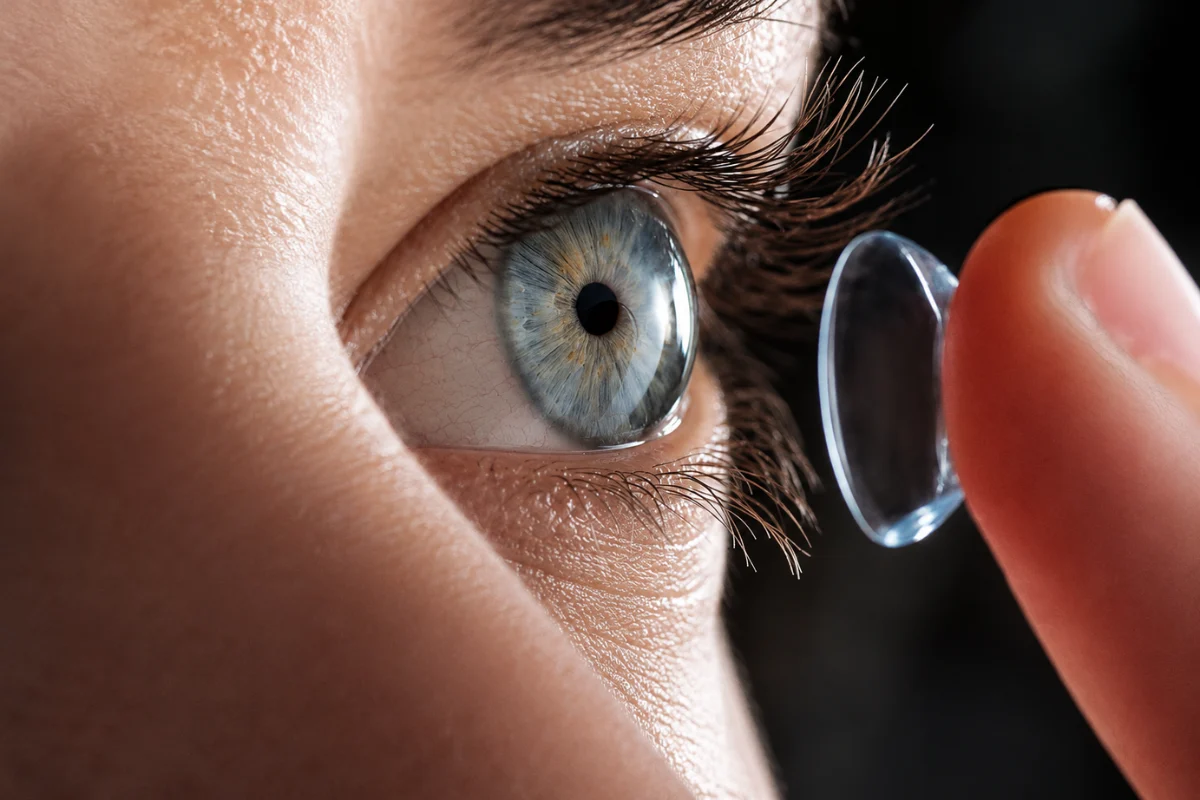
As vision begins to improve after retinal surgery, many patients ask a very practical question: When is it safe to wear contact lenses again? It may sound simple, but the answer is not always immediate. Even though the retina is at the back of the eye, the whole eye still needs time to recover, and the surface can remain dry, sensitive, or easily irritated in the early healing phase.
In many cases, contact lenses can be worn again, but timing matters. The right moment depends on the type of retinal surgery, how the eye is healing, whether drops are still being used, and whether the eye is stable enough to avoid extra irritation or risk.
Why This Question Matters More Than It Seems
Many patients assume that retinal surgery and contact lenses are completely separate issues. After all, retinal treatment works on the inside or back of the eye, while contact lenses sit on the front. But after surgery, the eye does not recover in separate compartments. It heals as one whole structure.
That means even if the retina is doing well, the front surface of the eye may still be dry, inflamed, or sensitive. The eyelids may still be coping with frequent drops. The eye may still feel sore or easily irritated. This is why the decision about lens wear is not only about retinal success. It is also about whether lens insertion, removal, and wear are sensible for the eye at that stage of healing.
Why the Type of Retinal Procedure Changes the Advice
This is one of the biggest points patients often miss. Retinal surgery is not just one thing.
Some patients have:
- Laser treatment for a small tear
- cryotherapy
- vitrectomy
- scleral buckle surgery
- gas bubble placement
- silicone oil placement
- retinal detachment repair involving more than one method
These are very different situations. A small retinal laser procedure may have a much quicker recovery than a vitrectomy with gas or surgery for a full retinal detachment. That is why one patient may be allowed to return to lenses relatively soon, while another may need to wait several weeks.
The deeper and more complex the surgery, the more cautious doctors usually are during the early recovery phase.
The Key Question Is Healing, Not Preference
Patients often ask whether it is safe to wear contacts after retina surgery, but safety depends on timing. The issue is not whether contact lenses are “good” or “bad” in general. The issue is whether wearing them at that point could disturb healing, worsen dryness, increase irritation, or raise infection risk in a recently operated eye.
An eye that is still red, tender, or reliant on frequent drops is usually not an eye that should be handled unnecessarily. On the other hand, once healing is satisfactory and the surgeon confirms that the surface is stable, many patients can return to contact lens use.
So the answer is often not a permanent restriction. It is simply a question of waiting until the eye is genuinely ready.
What Doctors Consider Before Saying Yes
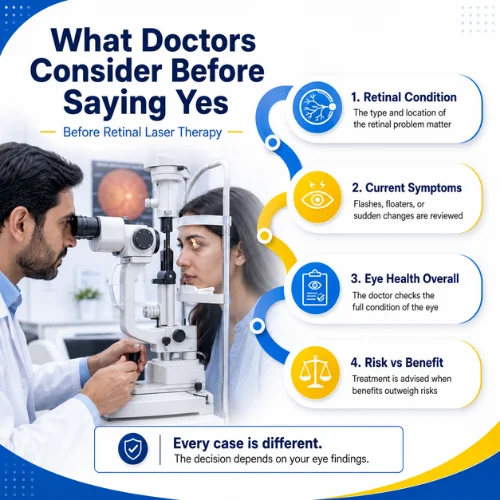
When an ophthalmologist clears a patient to restart contact lenses, they are usually thinking about several practical things at the same time.
1. Surface Healing
Even though the retina is the main focus of surgery, the surface of the eye still goes through stress. It may have been exposed to speculums, drops, surgical preparation, and postoperative medication. If the front of the eye is still irritated, lenses may feel uncomfortable or experience slow recovery.
2. Eye Handling
Putting in and removing a lens means touching the eye area. Even careful contact lens users can accidentally press, rub, or disturb the lids more than they realise. That may not be ideal while the eye is still healing.
3. Infection Risk
This is a very important issue. Any recently operated eye is treated with extra caution when it comes to infection. Contact lenses already require strict hygiene, even in a normal eye. After surgery, restarting too soon is simply not worth the risk.
4. Vision Stability
After retinal procedures, the prescription may change. Vision may still be fluctuating because of healing, gas bubble effects, retinal changes, or lens changes inside the eye. In that setting, the old contact lens power may not even be appropriate anymore.
Recovery Is Not the Same for Every Patient
One patient may feel surprisingly normal quite soon after surgery. Another may still have blurred vision, dryness, and discomfort for weeks. That variation is completely expected.
This is especially true for contact lens use post-retinal detachment, where recovery may be slower and more demanding than after a simple laser procedure. After detachment repair, the eye often needs time not only to heal physically, but also to settle visually. If a gas bubble has been used, vision can stay quite blurred for a period, and contact lenses do not solve that. In this phase, the main goal is to protect the surgical result, not forcing the eye back into an old routine too quickly.
After Vitrectomy, Patience Usually Matters
A vitrectomy is one of the most common retinal procedures, and it often comes with a recovery phase that makes patients more aware of the eye than they expected. Some people notice dryness, fluctuating vision, mild soreness, or a feeling that the eye is not quite “normal” yet. In some cases, vitrectomy may be performed alongside management of conditions such as vitreous haemorrhage or opacities, which can further affect the recovery timeline.
That is one reason doctors are cautious about the risks of contact lenses after vitrectomy. The contact lens itself is not usually the direct problem. The concern is wearing it too early while the surface is still sensitive, while drops are still frequent, or while the patient is still adjusting to healing. In that situation, lenses may create extra irritation, worsen dryness, complicate symptom tracking, or introduce avoidable hygiene risk.
Signs You Are Probably Not Ready Yet
Sometimes the eye itself gives very clear clues that the answer is still no.
You are probably not ready to restart contact lenses if:
- The eye is still visibly red or tender
- You are still using frequent antibiotic or steroid drops
- Vision is still changing significantly
- The eye feels gritty, sore, or dry
- You still have a gas bubble affecting your vision
- You have not yet had a follow-up confirming healing
- inserting or removing the lens would feel awkward or difficult
These are common-sense signs, but they matter. If the eye still feels clear postoperatively, it usually still needs more time.
The Most Honest Answer About Timing
Patients naturally want a specific timeline. They want to know exactly when I can wear contacts after retinal surgery. The difficulty is that no one answer fits every retinal case.
For some laser-only retinal procedures, the return may be much quicker if the surgeon is happy with the healing. For more involved retinal surgery, especially detachment repair or vitrectomy, the waiting period may be much longer. The correct timing depends far more on your healing and surgeon review than on any general rule you read online.
That is why surgeon clearance matters more than guesswork, comfort alone, or comparison with someone else’s experience.
Practical Tips When You Restart
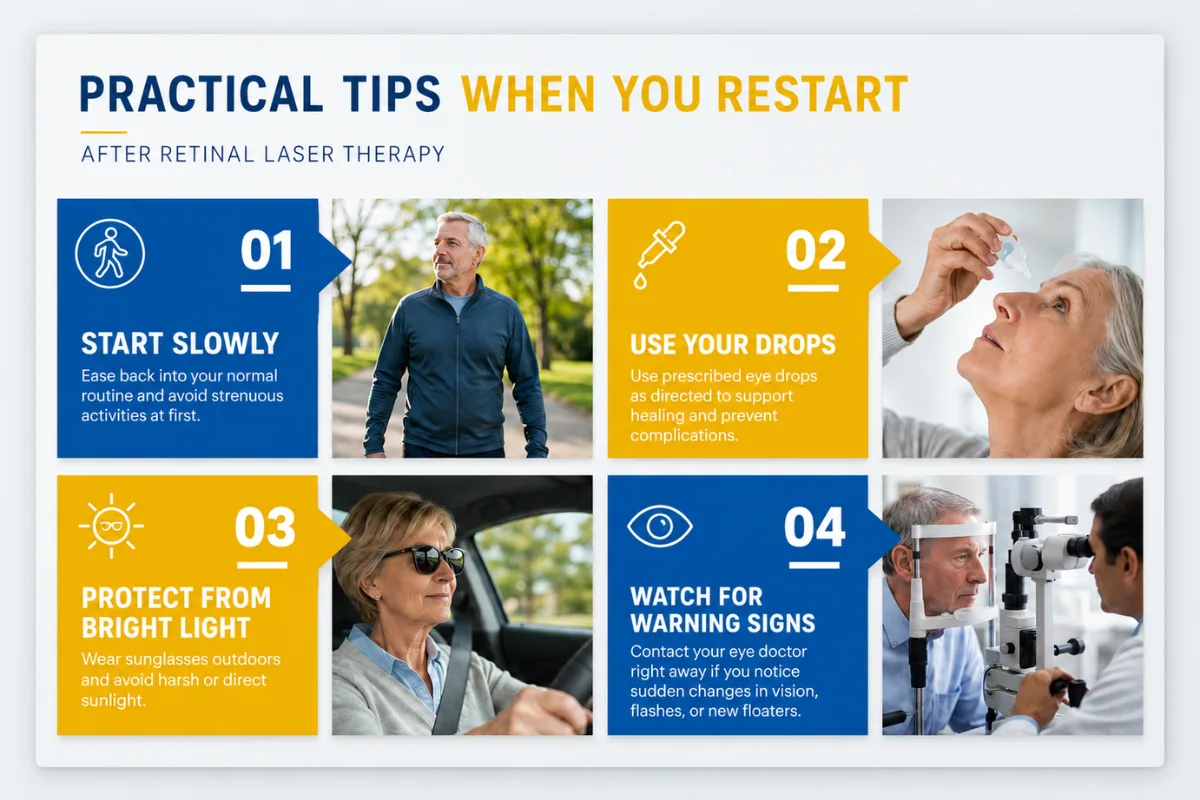
Once the eye specialist has said you can restart, it is still smart to do it gradually.
Start Slowly
Do not jump straight back into full-day wear. Begin with shorter periods and see how the eye feels.
Prioritise Hygiene
This matters even more after surgery. Clean hands, proper lens care, and no shortcuts.
Some postoperative eyes are drier than they were before. If the lens becomes uncomfortable quickly, it may be a sign that the surface still needs support.
Stop If the Eye Becomes Irritated
Do not push through soreness, redness, or unusual discomfort. Remove the lens and seek advice if needed.
Check the Prescription Again
After retinal surgery, especially if the eye has changed or vision has shifted, an updated contact lens review may be necessary.
Sometimes, Glasses Are the Better Option for a While
Many patients are so eager to get back to contact lenses that they overlook the obvious: glasses are often the easier and safer option during early recovery.
Glasses avoid touching the eye, reduce infection concerns, and make it easier to use drops without the extra complication of lens wear. That does not mean you are giving up on contacts. It simply means you are giving the eye a cleaner, lower-risk environment while it settles.
In many cases, that is the smarter short-term choice.
Common Misunderstandings Patients Have
“If the retina is repaired, I can wear lenses straight away.”
Not necessarily. The retina may be stable while the front of the eye is still healing.
“If the lens feels okay, it must be safe.”
Comfort alone is not enough. The eye may still be vulnerable even if the lens feels wearable for a short time.
“Laser treatment and major retinal surgery follow the same rules.”
They do not. A quick retinal laser procedure is very different from vitrectomy or detachment repair.
“I will know myself when the time is right.”
Sometimes you may have a good sense, but a follow-up review is still the safest checkpoint.
A Sensible Way to Think About It
The most helpful way to look at this is simple: the real issue is not whether contact lenses are allowed in theory. The real issue is whether your eye, at this stage of healing, is ready for them in practice.
Some patients can restart fairly soon. Others are much better off waiting until the drops are reduced, healing is confirmed, and the eye feels more stable. That is why blanket answers are rarely helpful.
Conclusion
Returning to contact lenses after retinal surgery is often possible, but the safest path is not to rush it. The solution is to let healing guide the decision, not convenience. Once the eye surface is calm, the retina is stable, and your surgeon confirms that lens handling will not disturb recovery, contact lenses can usually be considered again in a much safer way.
Until then, glasses are often the wiser temporary option because they protect the eye while it settles.
If you have had retinal surgery and are unsure whether it is the right time to restart contact lens wear, get proper advice before trying on your own. For personalised retinal guidance and postoperative care, contact Dr Mandeep Lamba on +971 52 422 7000 and get a clear, safe plan based on your specific procedure and stage of recovery.
FAQs
Can I wear a contact lens in the non-operated eye?
Often yes, but this depends on your overall recovery, your visual balance, and the specific advice you were given after surgery.
Are daily disposable lenses safer when restarting?
They may help reduce some hygiene concerns, but the bigger question is whether the operated eye is ready at all. Timing matters more than lens type.
What if I only had a retinal laser?
This is usually more flexible than recovery from internal retinal surgery, and some patients can return to lenses sooner with approval from their surgeon.
Can contact lenses damage the retina after surgery?
They do not affect the retina directly in the same way surgery does, but poor timing, infection, or excessive handling can complicate the overall recovery process.
Should I get a new contact lens fitting afterwards?
In some patients, yes. If your vision or prescription has changed after retinal treatment, an updated lens fitting may be worthwhile.


