

Cataract surgery complications are rare, but when they do happen, they can cause concern, discomfort, or even affect vision quality. Cataract surgery is one of the most commonly performed and successful eye procedures worldwide, restoring clear sight for millions each year. However, no surgery is entirely risk-free. In a small number of cases, patients may notice blurred vision, glare, pain, or other unexpected symptoms after the procedure.
The good news is that most post cataract surgery problems can be successfully treated or corrected. Understanding what can go wrong, why it happens, and how it can be fixed will help you approach the situation with clarity and confidence. Let’s explore the possible complications, their causes, and how a skilled ophthalmologist can restore your vision.
Understanding Cataract Surgery and Its Success Rate
Cataract surgery involves removing the cloudy natural lens of the eye and replacing it with a clear artificial lens implant (intraocular lens or IOL). The procedure typically takes about 15 to 30 minutes and is done under local anaesthesia.
Modern surgical techniques, such as phacoemulsification and femtosecond laser-assisted cataract surgery, have made the process extremely safe and precise. Success rates exceed 95%, and most patients regain clear, sharp vision within a few days.
However, as with any medical procedure, there are potential cataract surgery risks, ranging from minor irritation to rare but serious complications. Early detection and prompt treatment usually lead to full recovery.
Common Post-Cataract Surgery Problems
After cataract surgery, it is normal to experience mild symptoms such as watery eyes, light sensitivity, or slight blurriness for a few days. These are part of the healing process. However, if symptoms persist or worsen, they may indicate a complication.
Here are some common post-cataract surgery problems patients might face:
1. Posterior Capsule Opacification (PCO)
Often called a “secondary cataract,” this occurs when the thin membrane (capsule) that holds the lens implant becomes cloudy over time. It can cause blurry or hazy vision months or even years after surgery.
Solution: A quick, painless laser procedure called YAG laser capsulotomy restores vision immediately by creating a clear opening in the capsule.
2. Refractive Error or Blurred Vision
Sometimes, the implanted lens power may not match the eye’s exact requirement, leading to residual refractive error or distorted vision.
Solution: Minor issues can be corrected with glasses or contact lenses. In some cases, cataract surgery revision or a lens exchange may be recommended.
3. Swelling or Fluid Build-up (Cystoid Macular Oedema)
Inflammation in the retina after surgery can cause swelling, leading to blurred central vision.
Solution: Anti-inflammatory or steroid eye drops typically resolve this issue within weeks.
4. Infection (Endophthalmitis)
Though extremely rare, an infection inside the eye is a serious complication that can occur if bacteria enter during or after surgery.
Solution: Immediate medical attention and antibiotic injections can control the infection and preserve sight.
5. Lens Displacement
In some cases, the artificial lens may shift from its proper position, causing blurred or double vision.
Solution: Surgical repositioning or lens replacement can effectively correct this issue.
6. Retinal Detachment or Tear
A rare but serious complication that can lead to sudden flashes, floaters, or vision loss.
Solution: Urgent retinal surgery is required to reattach the retina and restore sight.
When to Suspect a Complication
While most mild symptoms improve naturally, certain warning signs indicate that something may be wrong. Contact your ophthalmologist immediately if you experience:
- Persistent pain or redness in the eye
- Sudden blurring or loss of vision
- Flashes of light or new floaters
- Increased sensitivity to light
- Swelling or discharge from the eye
These could point to cataract surgery complications that need prompt evaluation and treatment.
How Cataract Surgery Complications Are Diagnosed
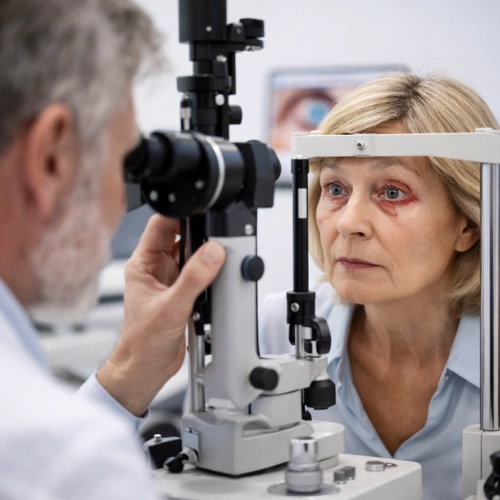
Your ophthalmologist will perform a detailed eye examination to determine the cause of your symptoms. Tests may include:
- Visual acuity testing: Measures clarity and focus.
- Slit-lamp examination: Checks the front structures of the eye.
- Optical Coherence Tomography (OCT): Scans the retina for swelling or tears.
- Fundus photography: Records any changes in the retina or optic nerve.
These advanced diagnostic tools help pinpoint the problem and guide the appropriate fixing cataract surgery plan.
Cataract Surgery Revision: What It Involves
If the issue cannot be corrected with medication or minor laser procedures, your doctor may recommend cataract surgery revision. This involves re-entering the eye to replace, reposition, or adjust the artificial lens implant.
Revision surgery is typically safe and less complex than the original procedure. It may be performed under local anaesthesia and often takes only 20–30 minutes. The goal is to restore proper lens alignment, correct refractive errors, and improve visual quality.
Modern technology, including advanced intraocular lenses and precise imaging systems, has made revision surgeries much more predictable and successful than ever before.
Fixing Cataract Surgery: Available Options
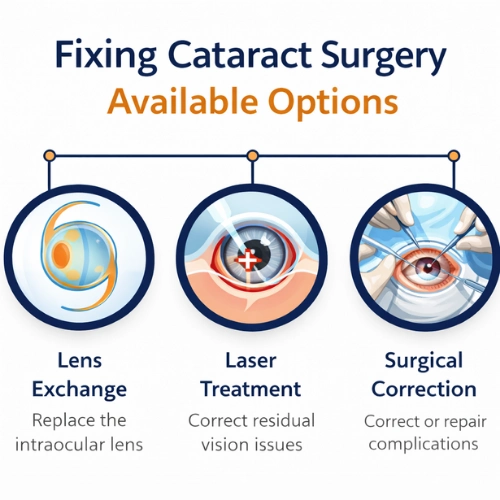
Depending on the nature of the complication, your ophthalmologist will recommend one or more of the following treatments to fix the problem:
1. Laser Treatment (YAG Capsulotomy)
Used to clear cloudiness caused by posterior capsule opacification. It is a simple, five-minute outpatient procedure.
2. Eye Drops or Injections
Anti-inflammatory or antibiotic drops may be prescribed for swelling, infection, or irritation.
3. Lens Exchange or Repositioning
If the lens implant is incorrectly positioned or the wrong power, it can be replaced or adjusted to restore vision.
4. Retinal Procedures
If the retina is affected, further surgery such as vitrectomy may be required.
With timely diagnosis and proper management, most cataract surgery complications can be resolved successfully, leading to good visual recovery.
Cataract Surgery Risks and Prevention
Even though complications are rare, it helps to understand the potential cataract surgery risks and how they can be minimised:
- Pre-existing conditions such as diabetes, glaucoma, or previous eye surgeries may increase risk.
- Choosing an experienced surgeon greatly reduces complications.
- Following all pre- and post-operative instructions ensures smooth recovery.
- Avoid touching or rubbing your eye after surgery.
- Attend all follow-up appointments to detect any early issues.
Prevention and communication are key. Always discuss your medical history and any symptoms with your ophthalmologist before and after surgery.
Long-Term Outcomes After Fixing Cataract Surgery
With proper management, most patients achieve excellent vision even after complications. Laser procedures and revision surgeries have high success rates, often restoring sight to near-perfect clarity.
Vision recovery depends on the cause of the complication and the speed of intervention. Early diagnosis and treatment almost always lead to positive cataract surgery revision outcomes. For most people, once the issue is corrected, the improvement in sight is long-lasting and stable.
Post-Surgery Care Tips for Recovery
Whether it is your initial surgery or a revision procedure, careful aftercare plays an important role in healing. Follow these eye surgery recovery tips for the best outcome:
- Use prescribed drops regularly and on schedule.
- Avoid strenuous activities and bending for at least one week.
- Protect your eye with sunglasses in bright light.
- Sleep on the side opposite the treated eye.
- Avoid rubbing or pressing your eye.
- Keep follow-up appointments to monitor healing.
These steps ensure comfort, prevent infection, and help the eye adjust smoothly after surgery.
Emotional and Psychological Aspects
Experiencing problems after eye surgery can be emotionally stressful. It is important to remember that most issues are correctable and that your vision can often be restored to normal. Open communication with your doctor, along with proper education about recovery, can greatly reduce anxiety and help you feel more in control of the situation.
Conclusion
While cataract surgery complications can be concerning, modern eye care offers highly effective solutions to restore clear vision. Whether it involves a simple laser correction, medication, or a cataract surgery revision, expert ophthalmologists can accurately diagnose and treat the issue with excellent success rates.
If you are experiencing post-cataract surgery problems, consult Dr. Mandeep Lamba, Ophthalmologist and Retina Specialist, Dubai, for expert assessment and advanced treatment options. His clinic offers precise diagnostic technology, personalised fixing cataract surgery solutions, and complete aftercare for safe and lasting recovery.
To book your consultation, contact Dr. Mandeep Lamba’s Clinic, Dubai at +971524227000 and get your vision back on track with trusted professional care.


