
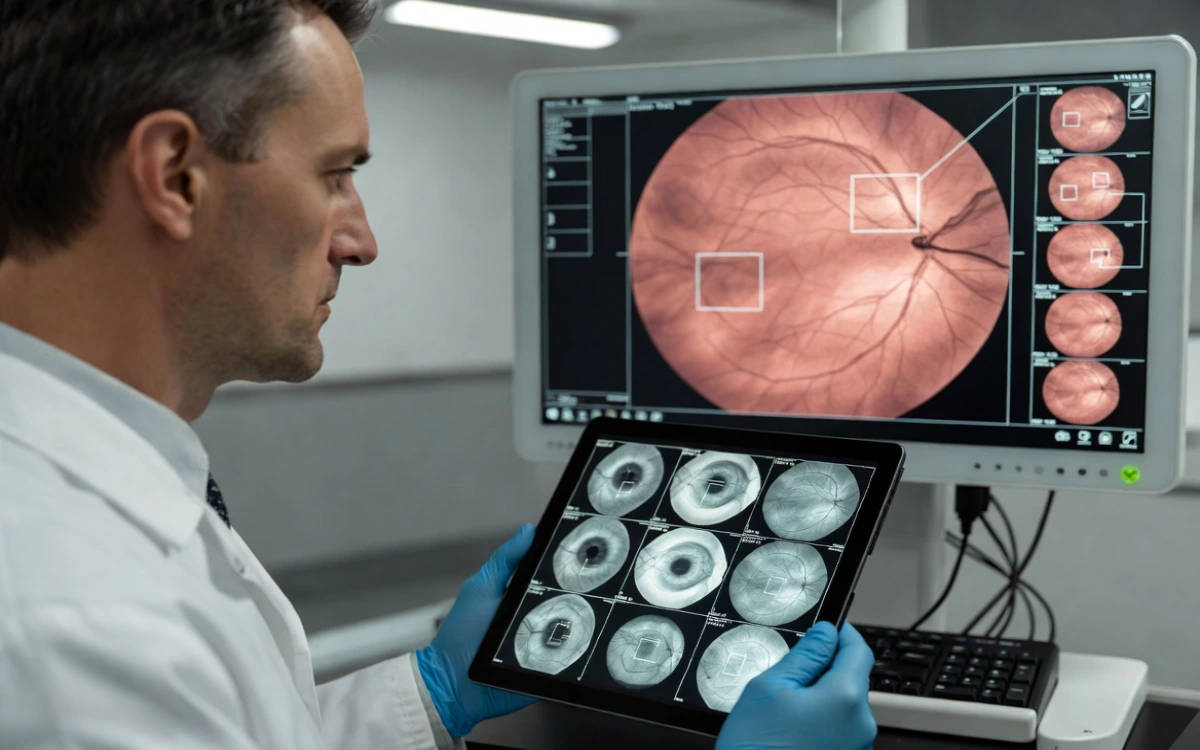
Artificial intelligence in retina care is transforming how eye diseases are detected, monitored, and managed. Once considered futuristic, AI is now becoming a powerful reality in ophthalmology clinics around the world. From analysing retinal scans to predicting disease progression, AI-based systems are helping doctors make faster, more accurate, and more personalised decisions for patients.
The retina is one of the most complex and delicate parts of the human body. Even small changes can indicate the early stages of sight-threatening conditions such as diabetic retinopathy, macular degeneration, or glaucoma. With AI stepping into the field, early diagnosis is no longer dependent solely on human observation — it is now supported by sophisticated algorithms that can process thousands of images within seconds.
Understanding Artificial Intelligence in Retina Care
Artificial intelligence refers to computer systems that can learn and perform tasks typically requiring human intelligence. In retina care, AI uses machine learning and deep learning models trained on large datasets of retinal images. These systems identify patterns and abnormalities that may not be visible to the human eye.
When applied in ophthalmology, AI can detect diseases at a much earlier stage, allowing for timely treatment and preventing irreversible vision loss. What makes this technology particularly exciting is its ability to improve continuously — the more data it analyses, the smarter and more accurate it becomes.
How AI in Ophthalmology Works
AI in ophthalmology relies on advanced imaging techniques such as fundus photography, Optical Coherence Tomography (OCT), and fluorescein angiography. These high-resolution images of the retina are processed through deep neural networks that learn to distinguish between normal and abnormal features.
For instance:
- In diabetic retinopathy, AI can detect tiny microaneurysms or haemorrhages before they cause vision changes.
- In age-related macular degeneration (AMD), AI can identify drusen deposits that signal early disease.
- For glaucoma, AI can evaluate the optic nerve for signs of damage.
These algorithms can grade disease severity, highlight areas of concern for the doctor, and even suggest next steps — all within moments of capturing an image.
This makes retina diagnosis AI a valuable assistant rather than a replacement for ophthalmologists, improving both efficiency and accuracy in clinical care.
Benefits of AI for Eye Disease Detection

Integrating AI for eye disease detection offers several key benefits:
1. Early and Accurate Diagnosis
AI systems can detect subtle changes in the retina that may go unnoticed in early stages, helping initiate treatment before irreversible damage occurs.
2. Speed and Efficiency
AI can analyse hundreds of retinal scans in seconds, reducing waiting times for patients and improving workflow in busy clinics.
3. Standardised Results
Unlike human interpretation, which can vary, AI offers consistent, objective, and repeatable analysis, ensuring reliable results every time.
4. Accessibility
AI-enabled portable screening devices allow retinal testing to be done in primary care clinics, remote areas, or even through telemedicine platforms, expanding access to eye care.
5. Cost-Effectiveness
By detecting diseases early and reducing unnecessary referrals, AI helps lower the overall cost of eye care for both patients and healthcare systems.
AI in Retinal Imaging and Screening
AI’s most significant impact in ophthalmology lies in automated screening for diabetic retinopathy and macular degeneration — two of the leading causes of vision loss worldwide.
For diabetic retinopathy, AI systems can automatically grade retinal images, identifying patients who need referral for specialist care. In fact, several AI-driven devices have already received approval from regulatory authorities such as the FDA.
Similarly, AI is being trained to identify early signs of age-related macular degeneration and monitor disease progression by analysing OCT scans. This helps doctors personalise treatment schedules, such as timing anti-VEGF injections, based on real-time data.
These advances are not replacing doctors but empowering them — enabling specialists to focus their time on complex cases rather than routine screenings.
Future of Retina Care: How AI Is Reshaping the Field

The future of retina care will be defined by seamless collaboration between human expertise and artificial intelligence. Rather than viewing AI as a replacement for ophthalmologists, it should be seen as a tool that enhances precision, accessibility, and efficiency.
Some of the emerging trends shaping the future include:
1. Predictive Analytics
AI will not only diagnose existing conditions but also predict who is at risk of developing retinal diseases. Predictive models based on genetics, medical history, and lifestyle data can forecast disease progression, allowing for preventive care.
2. Personalised Treatment Plans
AI will help design customised treatment regimens based on a patient’s specific response to therapy. For example, patients receiving anti-VEGF injections may soon have dosing intervals tailored precisely through algorithmic prediction.
3. Integration with Tele-Ophthalmology
AI-powered systems can screen patients in primary care or remote locations and refer only those needing advanced treatment. This could revolutionise eye care in underserved communities.
4. Surgical Assistance
AI-assisted robotic tools and augmented reality are being explored for precise retinal surgery. They could enhance surgical accuracy and reduce risks, particularly in complex vitreoretinal procedures.
5. Continuous Monitoring
Wearable eye sensors and home-based retinal scanners are being developed to continuously track retinal health. Data from these devices, analysed through AI, could alert doctors to any early signs of deterioration.
Challenges and Ethical Considerations
While the benefits of AI are clear, several challenges must be addressed before it becomes universally adopted in ophthalmology.
- Data Privacy: Retinal images are medical data and must be securely stored and processed to protect patient confidentiality.
- Algorithm Bias: AI systems trained on limited datasets may perform less accurately in diverse populations.
- Human Oversight: AI should support, not replace, medical judgment. Final decisions must always be made by qualified ophthalmologists.
- Accessibility of Technology: Ensuring that AI tools are affordable and available in developing regions remains a challenge.
Addressing these concerns through ethical frameworks and global collaboration will be key to safely advancing AI’s role in eye care.
AI in Ophthalmology: Current Applications in Dubai and Beyond
Dubai has quickly become a hub for adopting AI in ophthalmology, with many clinics and hospitals integrating AI-powered retinal imaging and diagnostic systems. These technologies enable faster patient screening, particularly for diabetic eye disease, which is prevalent in the region.
As AI continues to evolve, clinics across the UAE are likely to see greater use of real-time image interpretation, predictive analytics, and automated patient follow-up systems — all contributing to more efficient and proactive retinal healthcare.
Patient Perspective: How AI Helps You
For patients, AI means earlier diagnosis, fewer hospital visits, and more personalised care. Imagine having your retina scanned in a primary clinic, receiving an instant analysis, and being referred to a specialist only if necessary. This reduces waiting time, anxiety, and unnecessary tests.
In the near future, patients may even have access to portable eye scanners linked to smartphone apps that monitor changes in retinal health — making eye care more preventive than ever before.
The Role of Ophthalmologists in the AI Era
While AI systems can analyse data faster than any human, ophthalmologists remain central to patient care. AI enhances their decision-making but does not replace their experience, empathy, and clinical judgment.
Doctors interpret AI findings, discuss results with patients, and decide on the best course of action. This partnership between technology and expertise defines the future of retina care — a balance between innovation and human connection.
Conclusion
Artificial intelligence in retina care is no longer the future — it is the present, and it is redefining how retinal diseases are diagnosed and managed. With its ability to detect early changes, analyse massive datasets, and predict disease outcomes, AI in ophthalmology is making eye care faster, more accurate, and more accessible.
For advanced retinal diagnostics and comprehensive AI for eye disease management, consult Dr. Mandeep Lamba, Ophthalmologist and Retina Specialist, Dubai. His clinic combines cutting-edge retinal imaging with expert interpretation to deliver precise, patient-focused care — shaping the future of retina care today.
To book your consultation, contact Dr. Mandeep Lamba’s Clinic, Dubai at +971524227000 and experience how intelligent technology and expert care work together to protect your vision.


