

Cataract surgery is no longer only about removing a cloudy lens. For many patients, it is also an opportunity to plan how they would like to see after surgery.
Would you prefer clear distance vision and be comfortable wearing reading glasses? Is reducing your dependence on glasses important to you? Do you have astigmatism that needs to be corrected? Do you regularly drive at night, work on a computer or read fine print?
These questions are part of the difference between standard cataract surgery and Refractive Cataract Surgery in Dubai.
Both approaches remove the cataract and replace the natural cloudy lens with a clear artificial lens. The main difference lies in the level of visual correction being planned, the type of intraocular lens used and the patient’s expectations after surgery.
Neither option is automatically better for everyone. The right choice depends on your eye health, lifestyle, visual priorities, budget and willingness to wear glasses for certain activities.
First, What Is a Cataract?
A cataract develops when the natural lens inside the eye becomes cloudy. This lens normally helps focus light onto the retina so that you can see clearly.
As a cataract progresses, it may cause:
- Blurred or cloudy vision
- Glare from sunlight or headlights
- Halos around lights
- Difficulty driving at night
- Colours appearing faded
- Frequent changes in spectacle power
- Difficulty reading small print
- Needing brighter light for everyday activities
- Double vision in one eye
Cataracts commonly develop with age, although they may also be associated with diabetes, previous eye injury, prolonged steroid use, certain eye conditions or previous eye procedures.
Surgery is currently the only way to remove a cataract. During the procedure, the cloudy natural lens is removed and replaced with an artificial lens known as an intraocular lens or IOL. Cataract surgery is generally considered when the cataract begins interfering with daily activities such as reading, driving, working or watching television.
Are Standard and Refractive Cataract Surgery Completely Different Procedures?
Not necessarily.
The essential surgical step is similar in both approaches: the ophthalmologist removes the cloudy lens and implants a clear artificial lens.
The difference is mainly in the visual goal.
Standard cataract surgery primarily aims to remove the cataract and restore clearer vision, usually using a monofocal intraocular lens. Refractive cataract surgery aims to remove the cataract while also addressing selected focusing problems such as short-sightedness, long-sightedness, astigmatism or age-related loss of near focus.
In simple terms:
Standard cataract surgery focuses mainly on clearing the cloudy vision.
Refractive cataract surgery combines cataract removal with a personalised plan to reduce dependence on glasses where possible.
It is important to understand that “refractive cataract surgery” does not guarantee completely glasses-free vision. It represents a more customised approach to lens selection, measurements and visual targeting.
What Is Standard Cataract Surgery?
During standard cataract surgery, the cloudy natural lens is removed and usually replaced with a monofocal intraocular lens.
A monofocal lens is designed to provide its clearest focus at one main distance. In many cases, the lens is selected for clear distance vision. The patient may then need reading glasses for books, phones, menus and other close work.
Some patients may prefer the opposite arrangement, with the eye focused for near vision while wearing glasses for distance. The appropriate target should be discussed before surgery.
Standard cataract surgery can provide excellent visual improvement, particularly when the eye is otherwise healthy. It remains a suitable and reliable option for many patients.
What can a standard monofocal lens usually provide?
Depending on the patient’s eye measurements and final refractive result, it may provide:
- Clearer vision after cataract removal
- Good-quality vision at the selected focal distance
- Relatively low risk of glare and halos compared with many multifocal lens designs
- A straightforward option for patients who are comfortable using glasses
- A suitable lens choice for some patients with additional retinal, corneal or optic nerve conditions
However, standard monofocal lenses generally do not provide clear vision at every distance. A patient whose lenses are focused for distance is likely to need glasses for near tasks and may also require glasses for some intermediate activities.
The American Academy of Ophthalmology explains that monofocal IOLs provide focus at one distance, while other lens designs may offer a broader range of vision.
What Is Refractive Cataract Surgery?
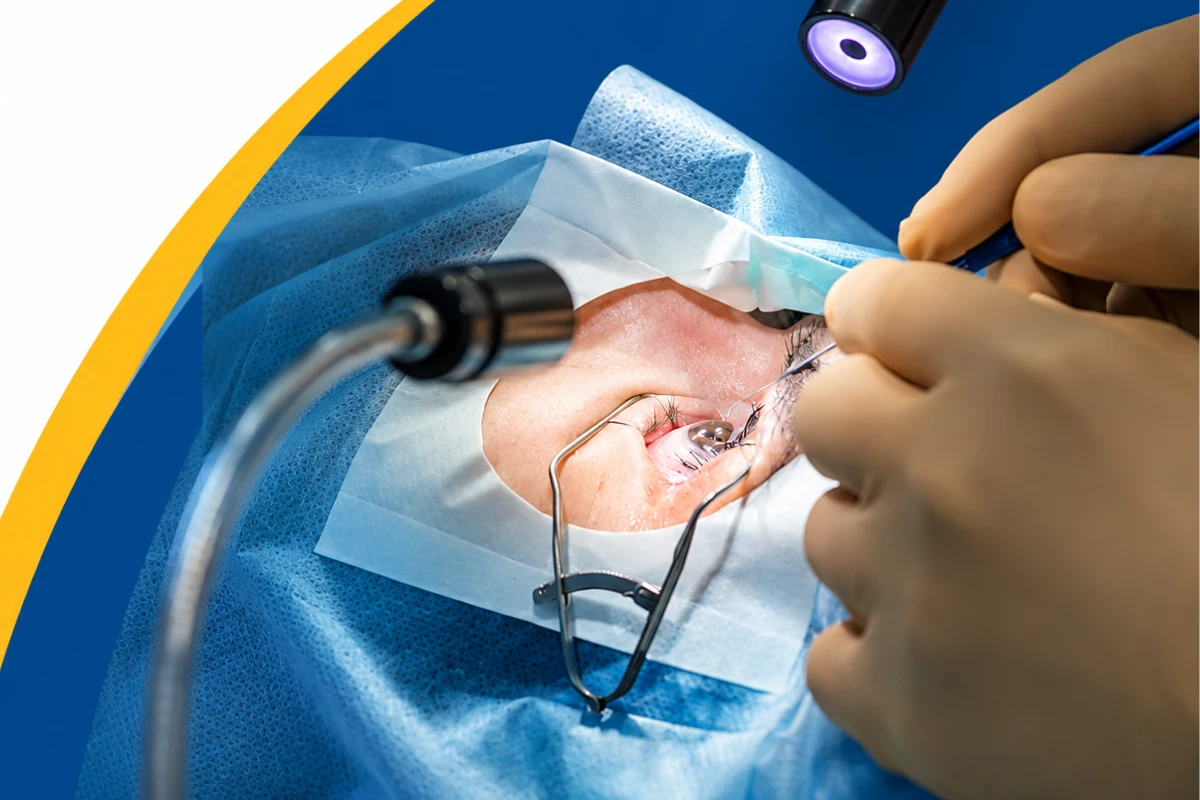
Refractive Cataract Surgery in Dubai is a personalised approach that treats the cataract while also planning the patient’s postoperative vision in greater detail.
The aim may be to reduce dependence on spectacles for one or more distances. This can involve:
- Advanced eye measurements
- Careful calculation of the IOL power
- Correction of regular corneal astigmatism
- Selection of a toric, multifocal, trifocal, extended-depth-of-focus or enhanced monofocal lens
- Monovision or mini-monovision planning in selected patients
- Laser-assisted steps in certain cases
- Additional treatment if a meaningful refractive error remains after healing
The success of this approach depends heavily on accurate measurements, healthy ocular surfaces, appropriate lens selection and realistic expectations.
Refractive cataract surgery is not simply about choosing the most expensive lens. It is about matching the lens and surgical plan to the patient’s eyes and lifestyle.
Understanding the Different Intraocular Lens Options
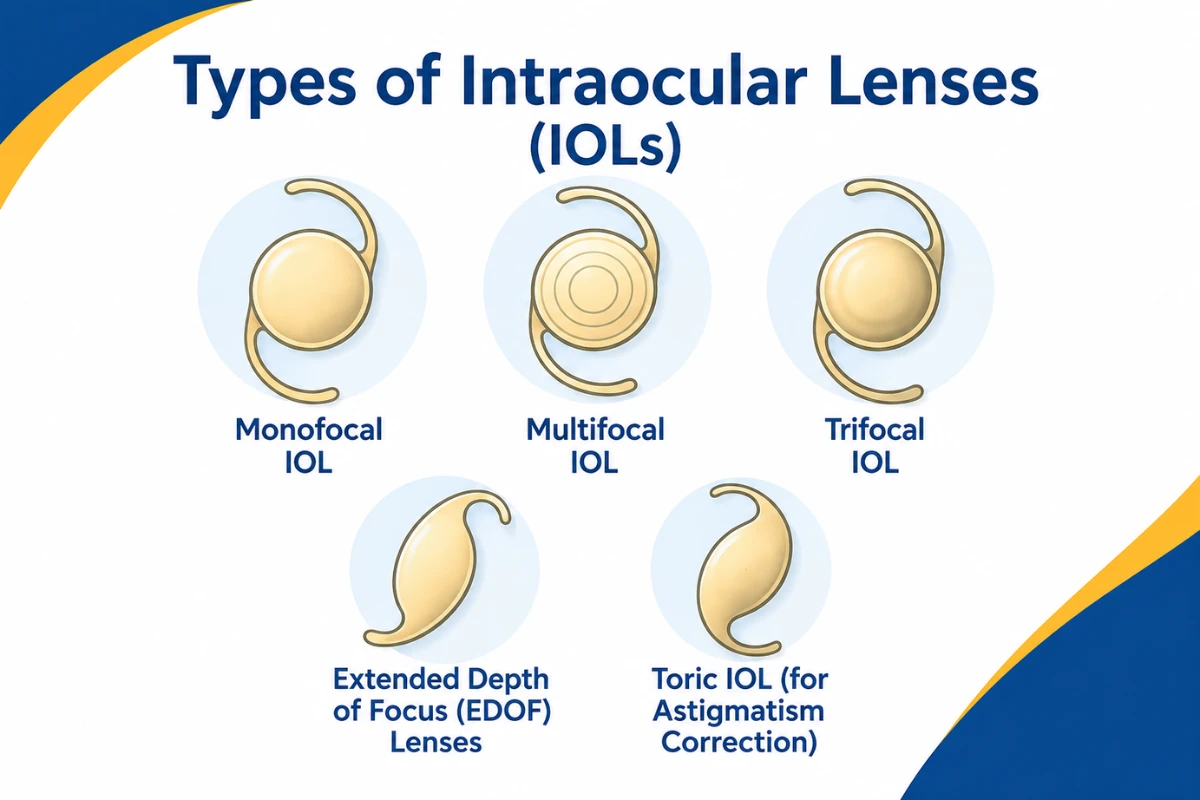
The artificial lens selected during cataract surgery plays a major role in how you see after the procedure.
There is no single lens that is ideal for every patient. Each option has strengths, limitations and possible visual side effects.
1. Monofocal Intraocular Lenses
Monofocal lenses provide their main focus at one distance.
Most patients choose distance vision as the target. They may be able to walk, watch television and perform many outdoor activities without glasses, depending on the final result. Reading glasses are generally still required.
Monofocal lenses may be suitable for patients who:
- Prioritise sharp distance vision
- Do not mind wearing reading glasses
- Regularly drive at night
- Are concerned about glare and halos
- Have certain retinal, corneal or optic nerve conditions
- Prefer a simpler visual arrangement
- Are comfortable using spectacles after surgery
A standard monofocal lens does not necessarily correct corneal astigmatism. If significant astigmatism is present, glasses may still be needed for clear distance vision unless it is corrected separately.
2. Toric Intraocular Lenses
A toric IOL is designed to correct regular corneal astigmatism in addition to replacing the cloudy natural lens.
Astigmatism occurs when the cornea has an uneven curve. Instead of light focusing evenly on the retina, the uneven shape can lead to blurred or distorted vision.
A toric lens must be selected based on detailed corneal measurements and positioned at a specific axis inside the eye. Toric IOLs may reduce the need for distance glasses in suitable patients, although they do not automatically provide near vision unless combined with another presbyopia-correcting design.
A toric lens may be considered when:
- You have clinically significant regular corneal astigmatism
- You want clearer unaided vision at the planned focal distance
- Your corneal shape is suitable
- The astigmatism measurements are stable and repeatable
- There is no major irregular corneal condition affecting predictability
Not every type of astigmatism can be fully corrected with a toric lens. Irregular astigmatism, corneal scarring or conditions such as keratoconus may require a different approach.
3. Multifocal or Trifocal Intraocular Lenses
Multifocal and trifocal lenses are designed to provide vision at more than one distance.
Depending on the particular lens design, they may provide:
- Distance vision
- Intermediate vision for computers and dashboards
- Near vision for reading and mobile phones
These lenses can offer greater independence from glasses than a standard monofocal lens. However, they may also produce visual effects such as halos, glare, starbursts or reduced contrast, particularly in dim lighting.
The American Academy of Ophthalmology notes that presbyopia-correcting lenses may reduce reliance on glasses but can cause halos, glare and reduced contrast in some patients.
Multifocal or trifocal lenses may be considered for patients who:
- Strongly want to reduce dependence on glasses
- Have healthy corneas, retinas and optic nerves
- Do not have significant untreated dry eye
- Understand that perfect vision at every distance cannot be guaranteed
- Can accept a possible adaptation period
- Do not have occupations or hobbies in which small reductions in contrast would be unacceptable
- Are not excessively disturbed by the possibility of night-time halos
They may be less suitable for some patients who:
- Drive extensively at night
- Have macular degeneration or other retinal disease
- Have advanced glaucoma
- Have irregular corneal astigmatism
- Have significant corneal scarring
- Have poorly controlled dry eye
- Have unrealistic expectations of perfect glasses-free vision
- Are highly sensitive to glare or optical disturbances
A detailed eye examination is necessary before deciding whether this type of lens is appropriate.
4. Extended-Depth-of-Focus Lenses
Extended-depth-of-focus, or EDOF, lenses are designed to create an extended range of vision rather than several separate focal points.
They often aim to provide:
- Good distance vision
- Improved intermediate vision
- Some functional near vision
Patients may still need reading glasses for small print or prolonged close work.
EDOF lenses may produce fewer or less intense visual disturbances than some multifocal designs, but glare and halos can still occur. Results vary depending on the particular lens, eye health, pupil size and any remaining refractive error.
These lenses may appeal to patients who prioritise distance and computer vision but are comfortable using glasses for fine near tasks.
5. Enhanced Monofocal Lenses
Enhanced monofocal lenses are intended to maintain many of the visual-quality advantages of a monofocal lens while providing somewhat better intermediate vision.
They may help with activities such as:
- Looking at a car dashboard
- Seeing a computer screen
- Preparing food
- Viewing objects at arm’s length
However, they do not usually provide the same level of near spectacle independence as a multifocal or trifocal lens. Reading glasses may still be needed.
Enhanced monofocal lenses can provide a middle-ground option for selected patients who want some improvement in intermediate vision without choosing a full multifocal design.
6. Monovision or Mini-Monovision
Monovision involves selecting one eye mainly for distance and the other for near or intermediate vision.
The brain learns to use the eye that is clearer for the required activity. Mini-monovision uses a smaller difference between the two eyes and may be easier for some patients to tolerate.
This approach can reduce dependence on glasses without using a multifocal lens. However, not everyone adapts comfortably. Some patients may experience reduced depth perception, imbalance between the eyes or difficulty with particular visual tasks.
A contact lens trial may sometimes be suggested before surgery, especially if the patient has never previously experienced monovision.
Standard vs. Refractive Cataract Surgery: Key Differences
| Factor | Standard Cataract Surgery | Refractive Cataract Surgery |
| Primary goal | Remove the cataract and restore clearer vision | Remove the cataract and customise postoperative focus |
| Typical lens | Standard monofocal IOL | Toric, enhanced monofocal, multifocal, trifocal, EDOF or customised monofocal plan |
| Astigmatism correction | May require glasses unless addressed separately | Can be planned using a toric lens or another suitable technique |
| Range of vision | Usually one main focal distance | May provide a broader range, depending on the lens |
| Need for glasses | Common for near, intermediate or distance tasks | May be reduced but cannot be guaranteed |
| Preoperative planning | Standard clinical measurements | More detailed refractive measurements and lifestyle assessment |
| Night-vision effects | Generally fewer with monofocal lenses | Halos and glare may occur with certain presbyopia-correcting lenses |
| Suitability | Appropriate for a wide range of patients | Depends more strongly on eye health and visual expectations |
| Cost | Usually lower | Usually higher due to advanced lenses, diagnostics or refractive services |
Does Refractive Cataract Surgery Use a Laser?
It may, but not always.
Refractive cataract surgery and laser-assisted cataract surgery are not exactly the same thing.
Refractive cataract surgery describes the visual goal and customised planning. Laser-assisted cataract surgery describes the use of a femtosecond laser for selected surgical steps.
A femtosecond laser may be used to:
- Create corneal incisions
- Create the opening in the lens capsule
- Fragment or soften the cataract
- Make selected corneal incisions to reduce astigmatism
The cloudy lens is still removed, and an IOL is still implanted.
Laser assistance does not automatically produce better vision for every patient. The final result also depends on lens calculations, corneal health, retinal health, the selected IOL, healing and any residual prescription. Traditional and laser-assisted methods can both provide good outcomes when appropriately performed.
Which Surgery Offers Better Vision?
The answer depends on what “better vision” means to you.
For one patient, better vision may mean sharp distance vision with the lowest possible risk of halos, even if reading glasses are required.
For another, it may mean being able to use a phone, computer and television with less dependence on spectacles, while accepting some night-time halos.
A standard monofocal lens can provide excellent visual quality at its selected focus. A presbyopia-correcting lens may provide a broader range of vision, but that broader range can involve optical trade-offs.
The Best Refractive Cataract Surgery in Dubai is therefore not defined only by the lens brand or the technology used. It is the approach that gives a suitable patient the safest and most realistic balance between visual range, quality of vision and spectacle independence.
Who May Benefit from Refractive Cataract Surgery?
You may be a potential candidate if:
- Your cataract is affecting daily activities
- Reducing dependence on glasses is important to you
- You have regular corneal astigmatism
- You use computers or digital devices frequently
- You have healthy corneas, retinas and optic nerves
- Your eye measurements are reliable
- Your expectations are realistic
- You understand the benefits and limitations of different lenses
- You are willing to attend follow-up appointments
- You accept that glasses may still be required for certain tasks
Candidacy must be confirmed after a complete eye examination.
Who May Be Better Suited to Standard Cataract Surgery?
A standard monofocal approach may be more appropriate when:
- You are comfortable wearing glasses after surgery
- Maximum night-time visual quality is a major priority
- You have macular disease
- You have significant glaucoma or optic nerve damage
- You have corneal scarring or irregular astigmatism
- You have unstable eye measurements
- You have significant untreated dry eye
- You have previously undergone complex eye surgery
- The surgeon believes a presbyopia-correcting lens could reduce your quality of vision
- You prefer a simpler and more predictable focal plan
Choosing a standard lens does not mean choosing inferior cataract care. For many eyes, it may be the safest and most appropriate option.
Why Is the Preoperative Assessment So Important?
The lens implanted during cataract surgery usually remains in the eye permanently. This makes the preoperative assessment and discussion extremely important.
Your examination may include:
Vision and spectacle assessment
The ophthalmologist checks how much of the visual difficulty is caused by the cataract and whether spectacles can still provide useful improvement.
Slit-lamp examination
This allows the doctor to examine the cataract, cornea, iris and other front structures of the eye.
Dilated retinal examination
The retina and optic nerve must be assessed to identify conditions that may limit the final visual result.
Biometry
Biometry measures the length and optical characteristics of the eye to calculate the required IOL power.
Corneal topography or tomography
These tests map the shape and curvature of the cornea. They help assess astigmatism, detect irregularity and guide toric lens planning.
Macular OCT
Optical coherence tomography may be used to examine the macula in detail. Subtle macular conditions may not always be obvious during a routine examination but can affect suitability for certain lenses.
Dry-eye assessment
An unstable tear film can affect the accuracy of corneal measurements. Significant dry eye may need to be treated before the final measurements are taken.
Lifestyle discussion
Your visual needs are as important as your eye measurements.
The surgeon may ask about:
- Night driving
- Reading habits
- Mobile phone use
- Computer work
- Sports and hobbies
- Professional requirements
- Previous experience with contact lenses
- Willingness to wear reading glasses
- Tolerance for glare or halos
- Your main visual priority after surgery
Questions to Ask Before Choosing a Lens
Before deciding between standard and refractive cataract surgery, ask your ophthalmologist:
- Is the rest of my eye healthy?
- Do I have astigmatism?
- Which distances are most likely to be clear without glasses?
- Will I still need reading glasses?
- Could this lens cause glare or halos?
- Is this lens suitable for someone who drives at night?
- Do I have dry eye that needs treatment first?
- Does my retina or optic nerve affect the lens choice?
- What happens if the final prescription is not exactly as planned?
- Could I need a laser enhancement, glasses or another procedure later?
- What are the additional costs?
- What result is realistic for my particular eyes?
A good consultation should help you understand both what a lens can offer and what it cannot promise.
Can Refractive Cataract Surgery Guarantee Freedom from Glasses?
No cataract procedure can guarantee that you will never need glasses again.
Even with advanced lens technology, some patients may need spectacles for:
- Very small print
- Prolonged reading
- Driving at night
- Computer work
- Low-light conditions
- Tasks requiring highly precise vision
- Correction of a small remaining prescription
The result may also be affected by healing, dry eye, corneal shape, retinal health and the way the brain adapts to the new optical system.
The goal should be reduced dependence on glasses where safely achievable, rather than an absolute promise of glasses-free vision.
What Are the Possible Risks?
Standard and refractive cataract surgery share the general risks of cataract surgery, including:
- Infection
- Inflammation
- Bleeding
- Changes in eye pressure
- Swelling of the cornea or retina
- Retinal detachment
- Movement or rotation of the implanted lens
- Posterior capsule opacification
- Reduced or lost vision in rare cases
Posterior capsule opacification is sometimes called a secondary cataract. It occurs when the capsule behind the IOL becomes cloudy and can usually be treated with a short laser procedure.
Refractive cataract surgery may also involve visual concerns such as:
- Residual short-sightedness or long-sightedness
- Residual astigmatism
- Halos, glare or starbursts
- Reduced contrast in dim light
- Difficulty adapting to multifocal optics
- Continued need for glasses
- Need for an enhancement procedure
- Rare need to reposition or exchange the IOL
Cataract surgery is common and generally safe, but it remains an operation. Patients should understand both the likely benefits and the possible risks before proceeding.
What Is Recovery Like?
Cataract surgery is generally performed as a day procedure. Patients are usually awake, with anaesthetic eye drops used to numb the eye.
Vision may initially appear blurred, bright or slightly distorted. Improvement often begins within the first few days, but the eye continues healing over several weeks.
Patients are commonly advised to:
- Use prescribed eye drops
- Avoid rubbing the eye
- Keep water, dust and cosmetics away from the eye initially
- Avoid heavy lifting for the recommended period
- Wear the protective eye shield as instructed
- Attend all scheduled follow-up appointments
- Avoid driving until the ophthalmologist confirms that it is safe
Seek urgent medical advice if you experience severe pain, increasing redness, a sudden reduction in vision, flashes, a sudden increase in floaters or a curtain-like shadow in your vision. The National Eye Institute notes that full healing can take several weeks and stresses the importance of follow-up and reporting concerning symptoms promptly.
Standard or Refractive Cataract Surgery: Making the Right Choice
Standard and refractive cataract surgery can both provide meaningful improvement in vision. The most suitable choice depends on what your eyes can safely support and what you expect from your vision after surgery.
A patient who values sharp distance vision and is comfortable wearing reading glasses may be very satisfied with a monofocal lens. Another patient who wants more freedom from spectacles may benefit from a toric, EDOF, trifocal or customised monovision approach.
The decision should never be based only on the word “premium” or on a promise of being completely glasses-free.
For patients considering Refractive Cataract Surgery in Dubai, Dr Mandeep Lamba provides a detailed assessment of the cataract, cornea, retina, optic nerve, astigmatism and lifestyle requirements before recommending a lens option. The aim is not simply to choose the newest lens, but to select the most appropriate visual plan for your individual eyes.
If you are searching for the Best Refractive Cataract Surgery in Dubai, begin with a comprehensive consultation and an honest discussion about your daily visual needs. The right cataract surgery is the one that balances clearer vision, safety, realistic expectations and long-term visual comfort.
Frequently Asked Questions
1. Is refractive cataract surgery the same as LASIK?
No. LASIK reshapes the cornea, while cataract surgery removes the natural cloudy lens and replaces it with an artificial lens.
Refractive cataract surgery may reduce a person’s spectacle prescription by selecting an appropriate IOL and correcting astigmatism, but the procedure takes place inside the eye rather than only reshaping the corneal surface.
2. Is a premium lens always better than a standard lens?
No. A premium or advanced lens offers additional optical features, but those features may not suit every eye.
A standard monofocal lens may provide better visual quality for certain patients, particularly those with retinal disease, optic nerve damage, corneal irregularity or significant night-driving requirements.
3. Can astigmatism be corrected during cataract surgery?
Regular corneal astigmatism may be corrected using a toric IOL or, in selected cases, corneal incisions. The method depends on the amount and type of astigmatism.
4. Will I need reading glasses after standard cataract surgery?
When a standard monofocal lens is focused for distance, reading glasses are usually needed for close tasks.
5. Will I need glasses after refractive cataract surgery?
Possibly. Advanced lenses may reduce dependence on spectacles, but they cannot guarantee complete freedom from glasses.
6. Can I have a different type of lens in each eye?
In selected patients, different lenses or different focal targets may be used in each eye. This is sometimes called a mix-and-match or blended approach. The decision requires careful planning because the two eyes must work comfortably together.
7. What if I previously had LASIK?
Cataract surgery is still possible after LASIK, but calculating the correct IOL power can be more complex. Previous treatment records may be helpful if available, and additional measurements or specialised calculation methods may be required.
8. How do I choose the best refractive cataract surgery in Dubai?
Look beyond advertisements or lens labels. A proper assessment should include detailed measurements, examination of the cornea and retina, a discussion about your lifestyle, and honest counselling about possible visual trade-offs.
The best option is the one recommended after your eye health and personal visual priorities have been carefully evaluated.


